Categories
Articles

Doctors Are Welcome at Centurion Day Hospital

Centurion Day Hospital has operating rooms available for surgeons who wish to avoid the stress associated with running a practice or operating within an acute facility. There are various factors to consider when you have your own business. Running your own medical practice can similarly bring about numerous complications. Doctors who are in charge of a facility are tasked with overseeing various aspects of a practice, which can become quite overwhelming over time. In most cases, professionals need to be employed to oversee areas in which a medical doctor simply does not have any expertise.  

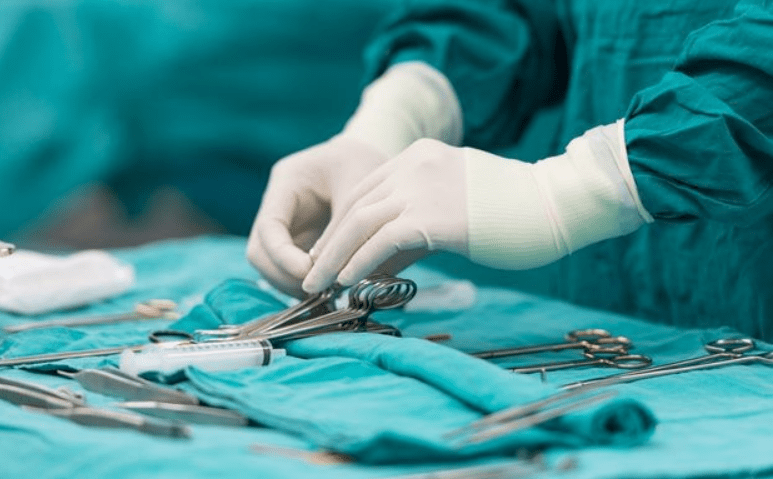
Centurion Day Hospital offers facilities that are very well equipped and a variety of procedures can be performed on the premises. A recent study that was done abroad found that around 60% of surgical procedures conducted in an acute facility can be performed at a day hospital. The facilities within a day hospital are oftentimes more advanced as these practices are able to invest more capital into specific facilities. Surgeons can take advantage of state of the art equipment without having to worry about the maintenance of these assets.  

The risk of infection is greatly reduced. We are capable of providing a safer, more sterile environment to their patients and medical practitioners by reducing the amount of time that patients spend at the hospital, as well as patients’ proximity to one another. Patients that make use of a day hospital are also less prone to have an infectious ailment as most individuals visit the facility to have a specific procedure performed. 

Centurion Day Hospital is committed to connecting doctors and patients in the most convenient way possible. Processes have been streamlined to provide patients with efficient access to services and the option is available to schedule a procedure online. Less uncertainty in scheduling means that a day hospital can better plan and predict their daily operations. Consultation rooms are available at our facility to provide doctors with a space to consult with patients before their surgery takes place. 

Centurion Day Hospital offers advanced surgical support and well equipped medical facilities to ensure that you have everything you need to make a success of your surgery. Contact us today if you are interested in making use of our world-class facilities. 
Categories
Articles

Gynaecological Surgery at Centurion Day Hospital

The thought of having a gynaecological surgery performed might send shivers down your spine as it is a daunting prospect to have a procedure in such a sensitive and crucial area. This is why it is important to ensure that you have all the information regarding a certain surgery to put your mind at ease.  Gynaecological procedures have seen major advances in technology over time to minimise the risks involved, with many of these surgeries being routinely performed without incident. The key thing is to ensure that you have an annual check-up performed by a professional in order to identify anything that could cause a medical problem.  

Various procedures such as dilation and curettage, endometrial ablation and  Labiaplasty that are performed at Centurion Day Hospital fall under the umbrella term of gynaecological surgery. You can easily arrange a consultation with one of our dedicated surgeons if you would like to have a diagnosis performed or if you have identified a problem. Your doctor will be able to explain the procedure to you and answer any questions that you may have.  Surgeries are performed on an outpatient basis and a patient will be able to return home on the same day. Our staff will provide you with all the information you need to make a speedy recovery after your surgery. 

Centurion Day Hospital is equipped with state-of-the-art equipment to perform a variety of procedures. Feel free to browse our website if you are interested in procedures other than gynaecological surgery. From orthopaedic surgery to pain management and everything in between, our qualified healthcare professionals are dedicated to providing the best possible care regardless of the procedure. The facility is centrally located in Centurion, making it easily accessible to patients in the greater Tshwane area.  

With any surgical procedure, there are some risks. Your procedure will have the greatest chance of success if it is performed by trusted medical practitioners. Centurion Day Hospital provides patients with advanced surgical support in safe and sanitary facilities to ensure that their surgery is performed under optimal conditions. Visit our website to book a consultation today! 

Categories
Articles

Taking Care Of Wisdom Teeth

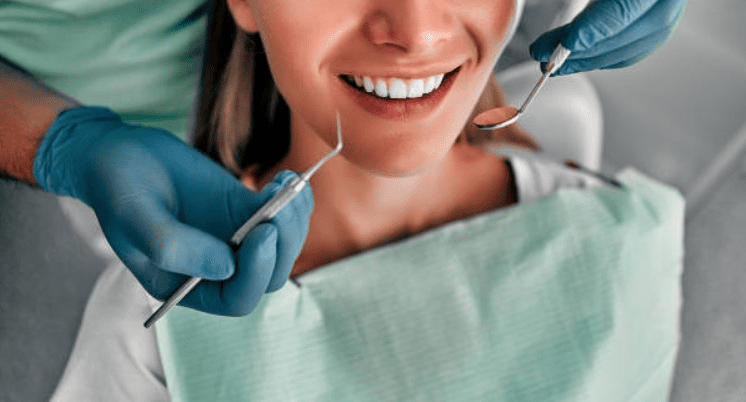
Wisdom teeth are the last teeth to erupt from someone’s jaw and usually present themselves during our teenage years. Also referred to as the third molars, these teeth are quite unique in that they appear such a long time after the other teeth have formed. 

It is this unique characteristic that unfortunately leads to so many complications associated with wisdom teeth and the reason that most people will have to have them removed to avoid complications. 

Why are Wisdom Teeth Extracted

If a person’s wisdom teeth are aligned in a way that they do not disturb the other teeth and the gum tissue remains healthy as the teeth erupt, it should not be necessary to have them extracted. In most instances however, this is unfortunately not the case. Oftentimes, the third molar will erupt at an angle and be partially revealed. This opening in the gums can allow bacteria in and cause food particles to become trapped. This leads to an infection in the gums that causes swelling and pain if left untreated. In severe cases, these infections can lead to cysts and tumors which is why preventative care is so important. 

If the wisdom teeth erupt sideways and remain compacted beneath the gums it could cause severe pressure on the other teeth, moving them and disrupting a person’s orthodontic alignment. A third molar that is partially impacted and not fully visible can cause the gum tissue overlying the impacted tooth to become inflamed and swollen. This inflammation is called Pericoronitis, which causes a lot of pain and discomfort in the mouth and could also lead to an infection.   

When Should Wisdom Teeth be Extracted? 

Wisdom teeth will erupt at different ages for different patients. A dentist should be able to identify them between the ages of 12 and 17 and make recommendations according to the position of the third molar before it reaches the gums. If the wisdom teeth are poorly positioned, the dentist will recommend that the patient have them surgically removed. It is important to extract wisdom teeth as soon as possible to avoid unnecessary complications. A younger patients’ teeth are not fully formed and the jawbone is more forgiving to surgical procedures, which decreases the surgical risks and greatly improves recovery. Removing wisdom teeth before they start to emerge will also effectively eliminate the risk of infection and gum inflammation.  

The Procedure 

The surgical extraction of wisdom teeth is quite a straight-forward procedure that can be completed relatively quickly under local anesthesia. An incision is made in the gums in order to expose the jawbone and reach the impacted tooth. The third molar is then uncovered, sectioned and removed. If necessary, the bone will be filled in with bone grafting material, after which the wound is sealed with sutures. The patient may experience some discomfort and swelling in the days after the procedure and will be unable to eat certain food for a few days. 

The dedicated team at Centurion Day Hospital will provide patients with everything they need to make a speedy recovery and will be on hand for any questions that might arise. Our team of surgeons are available to provide world-class care in our state-of-the-art facilities. Visit www.centuriondayhospital.co.za to book an appointment today!          

Categories
Articles

Circumcision In Urology

No matter how simple or complicated a procedure may be, going in for surgery is a daunting thought for most. Adult circumcision is not a very complex operation, but the idea of having surgery performed in such a sensitive area can be frightening nonetheless. What should put you at ease is the fact that the success rate of circumcisions is extremely high when it is performed in the right environment and by a qualified individual. If complications do arise, they are generally during the aftercare phase and are likely caused by bleeding or infection. These complications can be easily mitigated with the correct medical support and the right medicine. It is only if a patient fails to address these problems that they may have adverse consequences.  

Why Choose a Urologist for Circumcision?

A circumcision can be performed by a paediatrician, family doctor, general surgeon or obstetrician but most adult circumcisions are performed by a urologist. Urologists specialise in the male reproductive system while having extensive surgical training. What’s more, they are highly qualified to provide patients with professional aftercare advice and expertise in male reproductive disorders that is unparalleled by any other medical practitioner. Urologists receive at least 4 years of specialised training focused specifically on the male reproductive system and the urinary tracts of both men and women. They are also equipped to perform complicated surgeries on urinary tract organs and able to carry out other procedures related to male sex organs, such as vasectomies.

In South Africa, the prevalence of traditional circumcision is what leads to the majority of complications associated with the procedure. When a circumcision is performed for cultural purposes, the procedure is often performed by unqualified individuals using inadequate equipment. Genital mutilation, infection and sometimes even amputation can occur when a circumcision is performed incorrectly or in unsanitary conditions. With traditional circumcision, the majority of complications arise from infections that are contracted after the procedure has been performed, while the patient is in recovery. This highlights the importance of receiving professional advice before the surgery and having access to the correct antibiotics to facilitate a patient’s recovery after the fact. If an infection is left untreated it could lead to the patient requiring extended hospitalisation and in very severe cases, potentially death.
Due to constant advances in medical technology, one should only expect to face minor complications when a circumcision has been performed safely. Entrusting the procedure to medical professionals is the best way to ensure that your surgery is a success. Centurion Day Hospital offers advanced surgical support and medical facilities equipped with the latest technology to ensure that you have everything you need to make a speedy recovery. Visit our website at http://www.centuriondayhospital.co.za/ to schedule an appointment today!

Categories
Articles

Adult Circumcision Explained

Adult Circumcision is a common procedure that is performed worldwide for various reasons and is something that is quite prevalent in South African society. Circumcisions are often done for religious purposes, as is the case in Islam and Judaism, wherein infants are circumcised according to religious customs and laws. In South Africa, certain cultures perform circumcisions as a rite of passage and it is seen as something that facilitates the transitioning of a young boy into manhood. In these cases, the procedure is typically performed when an individual is between the ages of 16 and 19. 

When an individual decides to be circumcised as an adult, it is often because of personal preference or because of the possible benefits that circumcision could offer. There are also certain medical conditions that require circumcision as a treatment: balanitis (foreskin swelling), paraphimosis (foreskin does not return to its original position after retraction), balanoposthitis (inflammation of the foreskin), and phimosis (foreskin cannot retract properly). If none of these conditions are present, there would be no medical requirement for circumcision.

The Procedure

An Adult Circumcision is performed by surgically removing the foreskin of a patient’s penis, which is a piece of skin that covers the glans (head) of the penis. A local anaesthetic is administered to the patient, after which the blood flow to the tip of the penis is cut off to reduce the bleeding once the incision is made. The foreskin is then removed and the remaining section of skin is attached to the shaft of the penis, reducing the amount of skin covering the penis and exposing the glans. The procedure generally takes around 20 to 30 minutes and the patient is able to be discharged on the same day as the surgery. When performed in the correct environment and by medical professionals, the procedure itself is very low risk and patients recover within a few weeks if appropriate aftercare is practised.

Patient Aftercare

Patients are able to return to work within a few days, depending on how quickly the wound is healing. They might experience some discomfort in the beginning and patients should refrain from performing strenuous activities for up to four weeks. Sexual activities should be avoided for at least six weeks and care should be taken to keep the wound clean as infection is one of the biggest threats to the procedure. Because of this, doctors will prescribe antibiotics to a patient to prevent an infection from occurring. Patients should also try to avoid trauma to the wound by applying bandages properly and securing the penis to their body.  

 Benefits Of Circumcision

Studies have shown that there are certain benefits associated with having a medical circumcision. It is said to decrease urinary tract infections in infants and reduce the risk of being infected with a sexually transmitted disease (STD). It reduces the risk of infections to sexual partners and is also believed to reduce the risk of developing penile cancer due to the fact that it increases an individual’s overall genital health and hygiene. 

The best way to ensure that your procedure is a success is by entrusting it to medical professionals. Centurion Day Hospital provides patients with advanced surgical support and well equipped medical facilities to ensure that you have everything you need to make a speedy recovery. Visit our website at http://www.centuriondayhospital.co.za/ to schedule an appointment today!

Categories
News Welcome to new doctor

Meet Dr Liana Volkwyn

Dr Liana Volkwyn is a registered Plastic, Reconstructive and Aesthetic Surgeon, in private practice since October 2015. The mainstay of her practice is facial tissue reconstruction, cosmetic (body and facial) Surgery and Rhinoplasty.

Dr Volkwyn has rooms at the Centurion Cosmetic Clinic (012-663-2011), on the premises of the Centurion Day Hospital and at Brooklyn Day Hospital.

Categories
News Welcome to new doctor

Meet Dr Paul Pienaar

Qualifications: MBChB(pret) & Mmed (plast) UP

Dr Pienaar has been in Plastic and Cosmetic Surgery practice for the past 13 years.

He also has a keen interest in and treats Hemangioma & Vascular Malformation at his practice.

Dr Pienaar has rooms at the Centurion Cosmetic Clinic (012-663 2011) on the premises of the Centurion Day Hospital and also at Brooklyn Day Hospital. 

Categories
News Welcome to new doctor

Meet Dr GJ Richter

Dr GJ Richter is a sought-after Maxillofacial Surgeon, with his practice situated at Suite 206 Unitas Hospital, Tel: 012 6640190.

We are very excited to welcome Dr Richter to our team. 

Categories
News Welcome to new doctor

Meet Dr Mariza de Villiers

Welcome Dr Mariza de Villiers.

Dr de Villiers is a paediatric surgeon who also led the team of surgeons in the successful six-hour separation operation of the pair of conjoined twins in 2017.

Her practice is at Netcare Unitas, Tel: 012 6640494 and
Muelmed Mediclinic 202 Tel: 012 3414924 

Categories
News Welcome to new doctor

Meet Dr CJ (Boetie) Thiart

Welcome Dr CJ (Boetie) Thiart.

Dr Thiart is a well-known Orthopaedic surgeon that has special interest in knee, hip and shoulder surgery. His practice is at: Netcare Unitas Suite G10.

The rooms tel: 012 6647595